
At a glance
Constitutional Foundation and Governance
Established on 1 July 1997, the Hong Kong Special Administrative Region of the People's Republic of China is backed by the Basic Law which upholds the principle of "one country, two systems". This legal foundation guarantees Hong Kong exercises a high degree of autonomy, allowing its executive, legislative, and independent judicial powers, including the power of final adjudication, to remain intact.
Economic Landscape and Global Trade
Characterised by free trade, low taxation, and minimum government intervention, Hong Kong thrives as a major global service economy and a vital international trading powerhouse. It functions as the primary gateway to the Chinese Mainland, maintaining robust economic and financial links across the wider Asia-Pacific region. Supported by its own distinct currency, the Hong Kong dollar, the economy leverages a highly skilled workforce and an open market environment to cement its status as a leading global financial hub and preferred base for multinational enterprises.
Geography, and Infrastructure
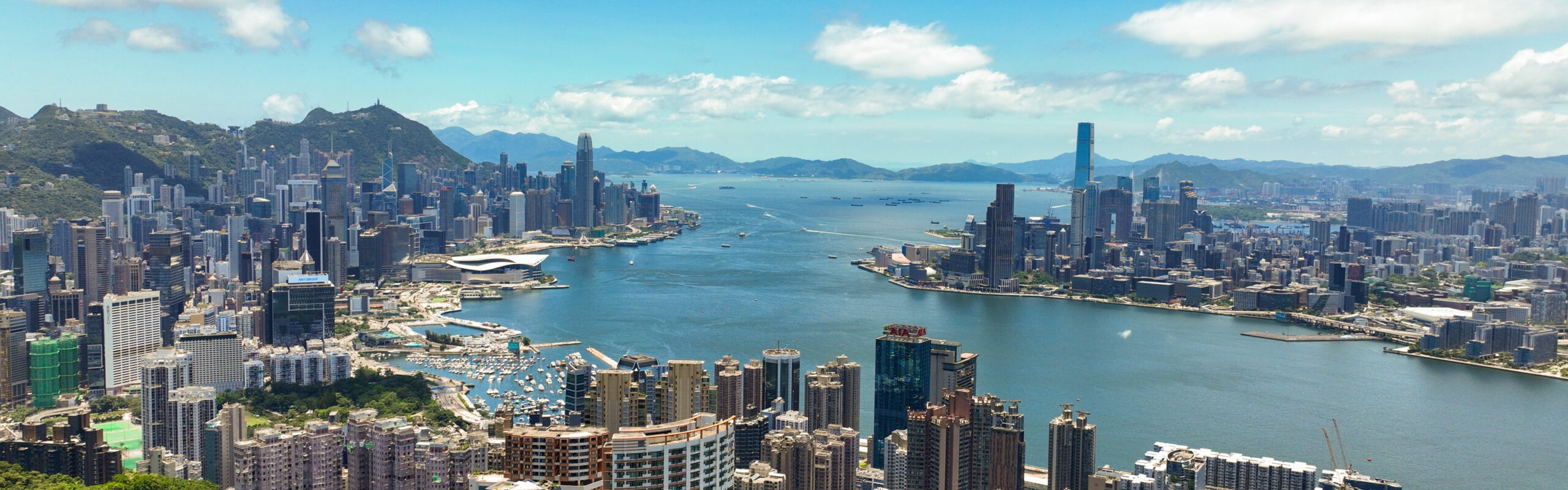
Hong Kong comprises Hong Kong Island, the Kowloon Peninsula, the New Territories, and 261 outlying islands, including Lantau Island. At its core lies Victoria Harbour, a world-renowned deep-water harbour that drives the city's maritime logistics. Despite its dense urban development, approximately forty percent of the total land area is preserved as country parks and special nature areas. Strategically located at the southern tip of China, Hong Kong forms part of the Guangdong-Hong Kong-Macao Greater Bay Area, an engine for regional integration and high-quality development in the Mainland.
Population, Diversity, and Language
Hong Kong is a densely populated metropolis where the vast majority of residents are of Chinese ethnicity, complemented by diverse international communities, notably from Southeast Asia and South Asia, and well-established Western expatriate populations. This cultural intersection is reflected in its linguistic landscape, where both Chinese and English serve as official languages. Cantonese is the most widely spoken language in daily life, while English is thoroughly integrated into the government, legal, professional, and commercial sectors. This widespread trilingual proficiency in English, Cantonese, and Putonghua empowers the local workforce to navigate global enterprise and cross-boundary business seamlessly.



